Category Archives: The Complete Writer

The Complete Writer: The Weirdness That Is Adsense

Writing Nonfiction: Magazines, Newspapers, Books, Blogs
Chapter 21. The Weirdness That Is Adsense

The Complete Writer
Part IV: Blogging

This book is a work in progress. A new chapter appears here each week, usually on Fridays. To see all the chapters published so far, visit the *FREE READ* page for The Complete Writer. You can buy a copy of the entire book, right now, in PDF format, or, if you like, as a paperback. For details, visit our Books page or send a request through our Contact form.

The Weirdness That Is AdSense

I used to enjoy exploring the mazes of Google AdSense’s labyrinthine reports and policies. Every now and again, one would see phenomena that were truly mysterious.

One of the things AdSense could do was to identify the type of computer used to access a page. If you selected “Performance Reports” and then clicked on “Platforms,” Google would tell you how many views of your site were made by people with desktops, mobile devices, etc. This still amazes me. It creeps me out: who needs Google spying on users in quite that much detail?

Over the one week, for example, Funny about Money readers viewed 563 of the site’s pages with “high-end mobile devices.” Some of them apparently clicked on ads, since they generated a couple of bucks that week. The first time I discovered this blandishment, a few people had been accessing the site through their mobile gadgets, but none rose to any advertiser’s bait. Over time, though, some of them began to bite.

Meanwhile, 5,005 pages were viewed from desktops. Unclear whether a laptop is regarded as a “high-end mobile device” or whether a MacBook (for example) is included among desktops.

Equally unclear what is meant by “unmatched ad requests,” a line that appears on the “Platform” page. Whatever it is, it can’t be very significant: it always registers “0.”

AdSense kindly includes a sort of glossary with its reports page—it’s really an agglomeration of FAQs, I think. Look up “unmatched ad request” and you get the answer to some customer’s question about why this item appears in his reports:

An ad request is counted each time your site requests an ad to be served, even if no ad is returned. Unless your coverage[1] is 100 percent, you will have more ad requests than matched requests (ads that are returned and displayed on your site), resulting in some unmatched requests.

Some reports have columns that are meaningful only for matched requests. For example, the Targeting type report shows how ads displayed on your site have been targeted. When an ad request is unmatched, there are no ads to consider, so the request has no targeting type.

This is why unmatched requests appear in a separate row.

Moving on, the Biggest Mystery of AdSense is why some days and some weeks vast lucre (oh, say, $1.95 a day!) comes pouring in, and at other times pay is in pennies. For a few weeks, FaM would crank more pennies than usual (in the dead of summer when readers should be vacationing at the beach!). But shortly thereafter it wouldn’t turn enough to get AdSense off its duff to send a payment. I never did, for the life of me, figure out what I was doing (if anything) to cause AdSense revenues to increase in some weeks and flatten out in others.

It does seem as though spikes in revenues may increase when you discuss certain topics. For example, one spike occurred around the time I was holding forth about credit cards. A bunch of ads for banks, credit cards, loan sharks, and the like came up (at least, they did on my computer—apparently these things are tailored according to what Google can see of your browsing habits as it spies on you). Maybe ads from well-heeled institutions pay better . . . that is, maybe Google charges ING more than it charges some local air-conditioning or pool company and then passes a few pennies of the profit along to the site publisher?

That would explain why some bloggers create whole sites devoted to nothing but discussing credit cards. Boring, but profitable.

AdSense occasionally performed moderately well for Funny about Money. Not well enough to retire to the Côte d’Azur, by any means, but well enough that if I could just be certain it would behave that way all the time (it did not!), the S-corporation could have afforded to buy me a cell phone.

But no.

AdSense is much like adjunct teaching: catch as catch can.

[1] For an incomprehensible definition, check this one out: https://support.google.com/adsense/answer/92360

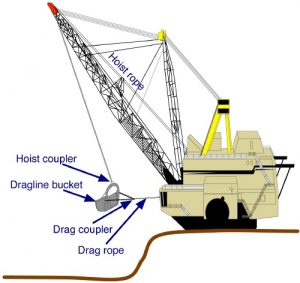
Image: Shamelessly ripped off from Wikipedia.

The Complete Writer: Blogging for Dollars

Writing Nonfiction: Magazines, Newspapers, Books, Blogs
Chapter 20. Blogging for Dollars

The Complete Writer
Part IV: Blogging

This book is a work in progress. A new chapter appears here each week, usually on Fridays. To see all the chapters published so far, visit the *FREE READ* page for The Complete Writer. You can buy a copy of the entire book, right now, in PDF format, or, if you like, as a paperback. For details, visit our Books page or send a request through our Contact form.

 Blogging for Dollars

One of my favorite sites is Problogger,[1] a blog on blogging. Alas, I’m guilty of not visiting often enough: I rarely do subscriptions because there’s too little time to keep up with them all, and when it comes to proactively visiting various sites, I get distracted easily. No doubt, though, if a person read the thing every day and blogged every day and studied other blogs carefully, before long the person would become expert at the blogging game and even make some money at it.

One morning, feeling a bit annoyed at Google AdSense, I dropped over to Problogger to see if Proprietor Darren Rowse had any clues to improve one’s relationship with that outfit. And lo! Up popped an article[2] by Todd Fratzl, holding forth on two basic ideas: 1) that you should experiment with ad size and placement, and 2) that with AdSense, less is more.

The first is fairly self-evident: since no two blogs are the same and no two sets of readers are identical, it makes sense that placement, color, and frequency would yield different results for each individual blog. In fact, given the Internet’s fluid nature, it’s also reasonable to expect that blog readership will change as blog content evolves. So it’s probably a good idea not only to try different sizes and placements for your blog’s advertising, but to test new patterns at regular intervals—say, at least once a year.

Personally, I was far more taken by the less-is-more concept. Much as I craved to see Funny about Money make a few shekels, I wasn’t happy about having to mothball its original WordPress design (White as Milk, the most exquisitely minimalist design WordPress.com offered at the time) in favor of a three-column theme that lends itself to ad clutter. The idea of having only one or two ad blocks appealed . . . and it would appeal a lot if Todd was right, that more readers will click on a site’s advertising if fewer ads are offered.

I surely never could claim I was getting rich off Funny about Money. Nor did I expect to: from what I can see, PF bloggers whose sites earn enough to let them quit their day jobs are technologically adept, work at it six to eight hours a day at least five days a week, and are strong marketers. None of those applies in my case. In theory, AdSense caused FaM to earn a little more than other part-time bloggers claim to earn: as a paying hobby, the revenue was just OK.

In reality, though, it was paying nothing. Often the on-paper revenues that AdSense showed the site had earned were not paid, and I began to suspect I’d never see a cent of that money.

AdSense is extremely frustrating to deal with. It has exactly zero customer support. You can not reach a human being. The entire operation is designed to frustrate attempts to get answers to questions beyond the “frequently asked.” The only live people you can reach are equally frustrated fellow customers, who gather at forums so diffuse that you could spend days trying to find someone addressing your issue and still not get an answer that pertains to your circumstances.

And then we have its bizarre payment policies. No money is disgorged until you reach a certain threshold (just now, $100). After your site has accrued that much, you then have to wait upwards of two months for payment. Thus, when FaM became eligible for a payment in June, the payment was not scheduled to arrive at my mailbox until the end of August.

“Mailbox” is the operative word: the direct deposit function wouldn’t work for me. Because there’s no human responsible for addressing customer problems, there’s no way to find out what the problem is or how to get AdSense to deposit funds directly to my bank account. The “help” forums? Full of other people bitching that the direct deposit function doesn’t work.

So the August check didn’t arrive. In that case, your only option is to ask that Google cancel the check it allegedly has issued and cut a new check. Do that, and you delay payment another entire month! So, the soonest I could expect to see money earned in June was sometime near the end of September.

It’s not a huge rip, but it is a rip. What it means is that AdSense is piggybacking free ad space on the blogger’s work. Effectively, I had been providing AdSense free space for the three months (June, July, August), and would continue to do so for at least another month (assuming payment arrived sometime in September). Multiply that by the 87 gerjillion bloggers who publish ads, and you get a clue how much Google profits by taking advantage of customers who can’t get in the front gate because there is no gate-keeper. The longer AdSense delays paying its ad publishers and the more publishers it stiff-arms, the more interest Google earns on ad revenues!

How much was Funny earning in never-paid revenues? Not much. It generated a modest amount each month (or would have, if I could ever get paid). It paid for the server space, more or less. Otherwise, you could say it earned enough to buy a bag or two of groceries each month.

Considering that I would probably blog anyway, the 30 cents an hour that AdSense revenue boils down to amounted to a spoonful of gravy. However, I could do without the hassle, and I could do without the frustration entailed in dealing with a megalithic corporation that sets up impermeable barricades between its employees and the unwashed customers. I began to realize that despite the passive nature of AdSense—after all, once you’ve accomplished the initial set-up you don’t have to do much to earn that 30 cents an hour—it’s probably not worth the page clutter.

Advertising may be the least of the effective ways to monetize a blog. Probably creating a product, such as an e-book or (depending on your blog’s topic) or some physical object that’s related to your content, will generate more profit. Trent Hamm, for example, sold Amazon books spun off The Simple Dollar and offered short spurts of advice, also spinoffs, downloadable from his site. He had to split his print book’s $7.95 retail price with the publisher and the middlemen, but every cent of those $2.00 PDF downloads went direct to his bank account. Since his readership was huge, he probably sold a fair number of self-published e-books and PDFs.

Regular blogging by its nature generates a salable product: copy. If the site is focused on a specific topic—or even covers two or three topics regularly—the blogger should have no trouble coming up with at least one publishable book and a number of DIY e-books. But there again, it’s a matter of marketing: books don’t sell themselves any more than blogs do!

[1] http://www.problogger.net/

[2] http://www.problogger.net/simple-changes-doubled-my-adsense-revenue/

The Complete Writer: The Art of Blogging

Writing Nonfiction: Magazines, Newspapers, Books, Blogs
Chapter 19. Ars Bloggiendi: The Art of Blogging

The Complete Writer
Part III: Blogging

This book is a work in progress. A new chapter appears here each week, usually on Fridays. To see all the chapters published so far, visit the *FREE READ* page for The Complete Writer. You can buy a copy of the entire book, right now, in PDF format, or, if you like, as a paperback. For details, visit our Books page or send a request through our Contact form.

19
Ars Bloggiendi

As a blogger since 2007, I’m always surprised at the number of would-be writers who say they don’t blog and don’t see why they should. And yet you meet them all the time, at every writer’s group, face-to-face and every online chatfest..

The blog genre started as a kind of online diary or journal: hence the name, web log. An early form of social media, for a time blogging was wildly popular among the techie set. It evolved from a first-person ramble composed of periodic posts to a magazine-like affair dispensing how-to advice, opinion, or information specific to a topic (personal finance blogs, for example, or “mommy blogs” or product reviews) and even to a journalistic genre. Many people monetize their blogs and some have had success in that (Get Rich Slowly and The Simple Dollar much enriched their founders).

There are two reasons writers find blogs attractive:

  1. The blog represents an easy five-finger exercise, a writer’s journal open to readers. As such, it not only helps you to improve your writing skills, it gathers readers.
  2. And, when you have a following, you have.a marketing device.

An active blog allows you to hold forth on subjects related to your scribbling, and it also helps you to build a mailing list. Many writers will tell you their most effective marketing tool is their marketing list. Also in the marketing and publicity department, you can post links to your blog on yeastier social media: Twitter, Pinterest, YouTube, FaceBook, LinkedIn, or whatever else is in vogue as you read this. That will call readers to your site, where you can pitch your writings to them.

We’re told the blog is on its way out—maybe it has already been hit in the butt by the door—because humanity so captivates itself with 140-character bursts of “content.” Personally, I like writing blog posts and I like reading them. It’s a lot like writing a Pepysian journal, only with an audience that can talk back.

There’s more to blogging than blurbing. The blog is a perfect platform for various kinds of long-form writing—not only journal-like or epistolary entries,[1] but reportage,[2] investigative journalism,[3] serious essays,[4] even stretches of fiction[5] or poetry.[6] None of these (except possibly haiku) are accomplished in 140 characters.

As for monetizing a website—trying to make it provide a side stream of income or maybe even quitting your day job to become a full-time online writer—that’s questionable and in my opinion largely beside the point. Some people do make a living wage at blogging (or they claim to), but they appear to be the exceptions. For quite a while I sold ad space and affiliate links at my site, Funny about Money.[7] I found that affiliate links for Amazon rarely earned enough to elicit a paycheck—Amazon will not remit payment until you’ve accumulated at least $10, which tells you about how much you earn by peddling Amazon’s products on your website.

Google AdSense did provide a small return—but certainly not enough to quit the day job. Nor, in my opinion, was a hundred bucks a month (when the site was on a roll) worth the amount of effort entailed in setting up AdSense, riding herd on it, and junking up the site with tacky ads. I made a great deal more on Funny by selling handmade jewelry off the site than by letting huge, profitable corporations further enrich themselves by exploiting my readership.

When I say that making money off your blog is beside the point, I mean that the point of writing a blog is to engage your readers in ongoing conversation about something that interests them and to persuade them that what you have to say is worth reading.

From there, it’s a fairly easy leap to persuade them to buy your books.

Funny about Money started as a personal finance blog. At one point, if you believe Alexa,[8] it ranked among the top 100 personal finance blogs in the English language. After a time, it occurred to me that there are only so many ways you can say “get an education or vocational training, get a job, live below your means, get out of debt and stay out of debt, and stash every spare penny into savings.” So, though the site still has a personal finance spin and I do belong to an international group of bloggers on the subject, at this point Funny is largely a lifestyle blog.

My main marketing blog, Plain & Simple Press News,[9] holds forth on topics that range from writing tips to recipes to higher education as I try to sell my literary wares. This site is optimized for Pinterest, under the direction of a marketing specialist[10] who has found that Pinterest is the most effective of the social media at driving traffic toward a blog. Once readers arrive there, of course, they see ads for my products . . . not Amazon’s or Google customers’. And certainly not ads from Scandinavian ladies looking for American “husbands.”

How to start a blog?

The simplest way is to go to one of the blogging platforms such as WordPress.com or Blogger.com. These are free, in exchange for a modicum of advertising, sometimes. I personally prefer WordPress, mostly because if and when you move to a private server, WordPress’s blog templates are readily available or easy to transfer. If you start out at WordPress.com, you get the benefit of WordPress’s Help service and a knowledgeable blogging community. With this assistance, you quickly learn how to use the basic software.

Buy your own domain name. The easiest way to do this is through GoDaddy[11] (again: in my opinion!). There are cheaper services, but GoDaddy has live human beings answering the phone, and if you have a question, these customer service reps are always helpful.

When you’re starting out, owning your site’s domain name makes it possible for you to create a URL that reads

http://yoursitename.com

rather than something like

http://yoursitename.wordpress.com.

The effect is much more professional.

WordPress.com provides a choice of several easy-to-use blog templates. Pick a simple one to get started—bearing in mind that you can easily switch to a new template later on. At WordPress.org, you can download any number of other free and premium templates, some of which are very swell.

As your site establishes itself, you may want to buy server space from a service such as Bluehost or BigScoots, both of which have proven highly satisfactory for my sites. And as your blogging empire grows, you may also consider hiring an IT professional[12] to run the techie back-end details of keeping a larger site or set of sites up and running.

What to write?

Whatever you feel like writing. The topic of your book is a logical subject. From there you can branch out to related topics. How-to topics are perennially popular, as are inspirational subjects, anything to do with money, and specialized topics for identifiable markets—fashion, make-up and the like for young people; recipes and cooking for the gourmet set; travel adventures; pets; kids . . . whatever interests other human beings will find a readership. If you write fiction, book reviews and writing tips always sell.

When to write?

I try to post at least once a day on at least one of my sites. The more content your site has, the higher up in Google’s search ratings it rises. Content, they say, is king. By that, “they” mean that the more original, fresh content you post, the more readers you attract and the better Google’s bots regard you.

How to write?

Typically, a blog post is similar to a short feature article or brite. Some are essentially personal essays or opinion pieces. Posts are usually nonfiction, although occasionally you’ll find sites where people post fiction and poetry.

Brevity is desirable, at least so we’re told. A classic blog post runs about as long as a newspaper column—maybe 800 words, give or take.

One technicality to bear in mind while building a blog post is something called SEO: search engine optimization. There are ways to get Google to notice your posts; they’re fairly simple and fairly rigid.

Pick a key word or phrase that describes the content of your post. Put that key word in the title, and then be sure it appears in the first paragraph, preferably the first sentence of your post. Hence, for a post on keeping cool on a hot summer day:

Living Life in a Hot New World

Hot where you’re at, is it? Ninety degrees and you think you’re gunna die before the sun goes down?

On the fiasco that evolved out of Costco’s decision to dump American Express in favor of Citigroup’s Visa card:

Thank You, Costco and Citigroup!

Costco’s move to annoying CitiGroup is going to cut my monthly Costco budget at least in half, and maybe by as much as three-fourths!

On an element of long-term money management:

Pay Off a Mortgage or Invest the Money Instead?

Yesterday at the weekly Scottsdale Business Association meeting, the assertion was again made that you should never pay off a mortgage in advance. If you have the money to do so, we’re told, you’ll come out ahead if you invest the money in securities and keep making those mortgage payments.

Your blogging software will ask you to enter “tags” or keywords before you publish your post. Be sure to include your keywords as “tags,” which helps to bring your post to the attention of people searching for those terms.

Any number of small programs called “plug-ins” will allow you to do various convenient things with your website.

The most indispensable of these, in my humble opinion, is Akismet, a piece of software that blocks about 98% of incoming spam comments. It comes with the package at WordPress.com; if you’re setting up a site on another server, be sure to install this program.

FeedBurner makes it easy for people to subscribe to your site. You want subscribers. A lot of subscribers.

All-in-One SEO Pack or Yoast SEO is convenient—guides you through and simplifies SEO tricks.

Any plug-in that will put links on the major social networking sites: good.

The writing part is not at all difficult. The back-end stuff is pretty simple as long as you’re hosted on WordPress.com or a similar service. If you decide you’d rather be self-hosted (i.e., have your site on a server such as Bluehost), it’s fairly easy to manage if you’re techie; if you’re not, it’s worth hiring some help at a nominal cost.

In any event, if you hope to be a Writer with a Capital W, don’t neglect blogging. It’s a key tool in your writing and your marketing.

[1] Example: Donna Freedman, “Are You Eating Your House”? Surviving and Thriving, April 2, 2015, http://donnafreedman.com/2015/04/02/are-you-eating-your-house/

[2] Kim Brooks, “What a ‘Horrible Mother’: How a How a Call from a ‘Good Samaritan’ derailed these mothers’ lives,” Salon, Aril 19, 2015. http://www.salon.com/2015/04/19/what_a_horrible_mother_moms_arrested_for_leaving_their_kids_in_the_car/

[3] Example: Center for Public Integrity, “How Kicking a Trash Can Became Criminal for a Sixth-Grader,” April 10, 2015, PRI, http://www.pri.org/stories/2015-04-10/how-kicking-trash-can-became-criminal-6th-grader?src=longreads

[4] The Big Roundtable: http://www.thebigroundtable.com/

[5] Jane Friedman, “The Best Literary Fiction Blogs and Websites,”November 22, 2011. Jane Friedman. https://janefriedman.com/best-literary-fiction-blogs-websites-2/

[6] sarahblake, “The Best Poetry Blogs in Town (We Think),” September 9, 2014, Picador, https://janefriedman.com/best-literary-fiction-blogs-websites-2/

[7] http://funny-about-money.com

[8] http://www.alexa.com/; for some idea of what it does, see https://en.wikipedia.org/wiki/Alexa_Internet

[9] http://www.plainandsimplepress.com/news/

[10] http://www.pinterestforbloggers.net/

[11] https://www.godaddy.com/; go here to see if the name you’d like to use for your site is available: https://www.godaddy.com/domains/domain-name-search

[12] My present Web guru is Grayson Bell at iMark Interactive
(imarkinteractive.com). Not being the techie type myself, I’ve found the savings in stress and frustration is well worth the modest cost of contracting with an expert. www.imarkinteractive.com

There’s Been Some Changes Made Today…

So…the bright idea I had to post individual chapters of The Complete Writer here at the Plain & Simple Press blog and then consolidate them in a single web page dedicated to the book…how’d that go?

Fairly hilariously. As it develops, WordPress has its limits. One of them is book-length documents. About the time we got to chapter 19 — all told, only about 33,000 words, a mere third the length of a typical nonfiction book — WordPress set its digital heels in the sand and refused to proceed further. It would not accept any more links to chapters. And it slowed to the speed of a stampeding snail.

Being an experienced Cox customer, of course I assumed this was a connectivity issue. Cox does a number on you every time you turn around, unless you’re a multi-zillion-dollar corporation. Usually, in time these antics pass.

Not so, the Resistance. Finally I had recourse to our Web Guru, Grayson Bell. Aghast at what he found on the TCW page, he explained that there IS, after all, a limit.

So we had to dream up a workaround.

How’s about I post the stuff as a PDF? said I.

As one PDF? Not so much! said he.

Fortunately, the book falls into not one, not two, not three, but nine sections comprising 48 chapters. So, I proposed posting nine PDFs, one after another as each is completed, each PDF to contain one section of the magnum opus.

This seems to work. So far, anyhow. We now have three PDFs online at The Complete Writer‘s page, containing all the copy that had been published as 19 consecutive chapters. The page is un-choked, de-stalled, fully operative once again. Whether it will stay that way remains to be seen. But for the nonce: it works.

You could cause angels to sing, Dear Reader, if you would please go to the Complete Writer work-in-progress page, download one or more of the PDFs linked to the first three sections, and then let me know if they come over to you all right and if they look OK when you open them.

No doubt there are typos and weirdnesses in them. It took two and a half-hours to convert 48 chapters into nine PDFs, and of course during the process Word decided to get weird (as usual), adding still more hassle to a ditzy process of the type I truly hate doing. How any human being can make a living as a computer tech without being driven straight to the bourbon bottle or the meth pipe escapes me.

Presumably, the same thing will have to be done with If You’d Asked and Ella’s Story. But not now. Totally not now…

The Complete Writer: Research Blues *FREE READS*

The Complete Writer
Part III

Writing Nonfiction: Magazines, Newspapers, Books, Blogs
Chapter 17. Research Blues

You do not want to have to explain yourself to these folks…

So you want to be a nonfiction writer. You think you’d like to be the next John McPhee, flying into the national consciousness astride a copy of The New Yorker. Or maybe you think you want to be a great investigative journalist, to see your byline on the cover of The Rolling Stone.

In that case, you need to contemplate the story of the Philadelphia writer who told The Rolling Stone a sensational tale of rape and mayhem on a college campus.[1] And while we’re at it, take a look at NPR’s report of the incident. [2]

Lest you’ve had your head under a bucket: that notorious journalistic scandal involved an investigative report in Rolling Stone that accused seven young men of committing a brutal rape during a drunken fraternity party at the University of Virginia. A great flap arose—the story quickly spread nationwide and around the globe, aided and abetted by the present widespread concern over sexual harassment and assault.

The source for this story was an unnamed young woman, discreetly given a pseudonym (“Jackie”) and otherwise left unidentified. At the woman’s request, the reporter, Sabrina Erdely, never attempted to contact any of the alleged offenders.[3] People “Jackie” claimed as witnesses were not named, nor (evidently) did Erdely speak with them.[4] In the ensuing uproar, the university suspended all fraternity and sorority activities, and the university came under intense federal scrutiny for its policies.

As it develops, it’s highly unlikely “Jackie” was attacked in the Phi Kappa Psi house on the night of the supposed party, because no party took place at Phi Kappa Psi that night. Reporting at Slate,[5] Atlantic writer Hanna Rosin reveals that the fraternity did not host a party on the evening of September 28, 2012, and that “Drew,” who allegedly took the victim to the party and joined in the assault, told a Washington Post reporter that he had never met “Jackie”—a statement that, if untrue, would be easy to disprove within the gossipy community that is a college campus.

This is serious stuff. You can see, even on the surface, the harm caused by inaccurate, careless reporting. Evidently Ms. Erdely was misled by a source who deliberately perpetrated a hoax. However, she—Erdely—made that possible by failing to do her job properly.

Whenever you do any kind of nonfiction writing, even if it’s reporting on a meeting of the town garden club, a single, overriding imperative dictates your actions:

Every time you encounter a fact that is in any way controversial, questionable, incendiary, or even just mildly odd, you MUST follow up on it by contacting all of the people involved and asking for comment.

This is not an option.

People dispense factoids to reporters all the time. Some of the information you get from sources you think are reliable is true. Some of it, alas, is not: it’s either mistaken or an outright lie.

I have had both of these happen to me in the course of a fifteen-year career. It’s not as easy to identify accuracy as you think. And, given an apparently reliable source, it’s unnervingly easy to get complacent.

Your job, as a writer of nonfiction, is to get the facts right. It means your job is always to question authority!

There’s no leeway in that.

Yes, I do know that one school of thought teaches undergraduate scribblers that “creative nonfiction,” also known as “literary journalism,” allows one to tweak the facts to fit the “plot,” “theme,” and characterization one is playing with. But, my friends, that school of thought is dead wrong.

There is never, ever a time that you are allowed to tweak the facts, to get the facts wrong, to withhold some facts to create an impression you wish to inflict on your readers, to rearrange facts, or to invent facts. That is not what creative nonfiction or literary journalism is.

It’s a firing offense to play fast and loose with the facts in pursuit of a lively story. I happen to know a reporter who was fired from The Arizona Republic for exactly that cause. And yes: he went on to teach “creative nonfiction” at the local university, where he persuaded students and at least one of his colleagues that adjusting facts was part of the technique of writing an entertaining story.

If anyone ever tells you this practice is acceptable, run away.

A journalist’s pen (or keyboard) is enormously powerful. You hold in your fingers the ability to destroy lives, to drive companies out of business, and to bring down governments. And so you are called upon to abide by ethical demands that far exceed the standard applied to most mere mortals.

Consider the potential harm the University of Virginia story could do:

  • You may be sure that within hours after Rolling Stone went to press, everyone on that campus knew the names of the seven alleged rapists. Their reputations were permanently compromised. Some probably left the university. But whatever they did, they may never outrun the calumny: their future careers may affected by what is evidently an untruth.
  • The university’s reputation was compromised and placed under a cloud. Would you send your daughter there?
  • The fraternity’s reputation, already a bit suspect,[6] was further compromised. Would you let your son pledge this outfit? My kid would be paying his own way through school if he made that decision.
  • Rolling Stone’s reputation was hopelessly compromised. If you ever believed anything that rag published before this happened, will you believe anything they publish in the future?
  • In a lawsuit, Rolling Stone was found liable for an enormous figure. The claims that were published, because they were false, are libelous. While a reporter’s duty is to check facts and confirm the truth of negative reports, the final responsibility to protect against libel rests with the editor. Because the reporter did not bother to track down the accused perps and ask for their side of the story—or even to confirm that a party actually occurred—the first thing a plaintiff’s lawyer would do is claim the story was concocted out of malice. And that is very much, very expensively a matter of libel. So, this put Rolling Stone at risk of huge financial penalties. Erdely, depending on her contract and whether she is an employee or a freelancer for Rolling Stone, may also be separately liable for huge claims. Each of those seven guys could bring separate suits, and so can the fraternity itself. We are contemplating more dollars than the human mind can conceive.

So, how can you protect yourself, as a reporter, from being taken in as Ms. Erdely apparently was? No reporter is 100 percent safe from our own errors and others’ deception. However, you can develop a few habits that will help:

  • Always confirm fact. Everything a source tells you should be double-checked through your own research.
  • When a claim is made about a person, call that person and ask for comment. If the person will not return calls or emails or accept visits, state in your article: “Boxankle did not return calls from a reporter from Rolling Stone.”
  • When a claim is made about a company or an agency, call the PR people or someone in authority at the company or agency and ask for comment. Again, if they refuse to speak to you, in your article explicitly state who you tried to contact, how you tried to contact them, and that they would not speak to you or they declined to comment.
  • Record every interview. If you write from your handwritten notes, listen to the interview to be sure your notes are correct.
  • Keep every recorded interview for at least six months. That is every interview, even those feeding some fluffy cheery little piece of froth. If anything even faintly controversial or technical is said, keep the interview permanently.
  • Unless your publication explicitly prohibits it, run the copy past people you interviewed and ask them to check it for accuracy. Do not accept editorial corrections; tell them you are asking only for confirmation of accuracy.
  • Never rely on an editor to check facts. Some publications do not hire fact-checkers.
  • Understand the law on libel and defamation; see chapter 31 for more on this.

All of these things are part of your job.

[1]Samantha Melamed, “Phila. Writer at Center of Controversy over Rape Article,” The Philadelphia Inquirer December 7, 2014. http://articles.philly.com/2014-12-07/news/56783207_1_philadelphia-magazine-rolling-stone-jackie

[2] David Folkenflik, “Defining Narrative Questioned in Rolling Stone UVA Rape Story,” National Public Radio, December 5, 2014. http://www.npr.org/2014/12/05/368768514/defining-narrative-questioned-in-rolling-stone-uva-rape-story

[3] Paul Farhi, “Author of Rolling Stone Article on Alleged U-Va. Rape Didn’t Talk to Accused Perpetrators,” The Washington Post, December 1, 2014. https://www.washingtonpost.com/lifestyle/style/author-of-rolling-stone-story-on-alleged-u-va-rape-didnt-talk-to-accused-perpetrators/2014/12/01/e4c19408-7999-11e4-84d4-7c896b90abdc_story.html

[4] Hannah Rosin, “Key Player in UVA Rape Story: “Rolling Stone Never Talked to Me.” Slate, December 6, 2014. http://www.slate.com/blogs/xx_factor/2014/12/06/rolling_stone_uva_rape_story_continues_to_unravel_jackie_s_friend_andy_speaks.html

[5] Hannah Rosin, “Blame Rolling Stone,” Slate, December 5, 2014. http://www.slate.com/articles/double_x/doublex/2014/12/rolling_stone_backs_away_from_its_uva_gang_rape_story.html

[6] Wikipedia, s.v. “Phi Kappa Psi,” n.d. https://en.wikipedia.org/wiki/Phi_Kappa_Psi#Controversy

The Complete Writer: The Joy of Facts *FREE READS*

The Complete Writer
Part III

Writing Nonfiction: Magazines, Newspapers, Books, Blogs
Chapter 15. The Joy of Facts

This book is a work in progress. A new chapter appears here each week, usually on Fridays. To see all the chapters published so far, visit the *FREE READ* page for The Complete Writer. You can buy a copy, right now, in PDF format, or, if you like, as a paperback. For details, visit our Books page or send a request through our Contact form.

Occasionally I revisit one of my very favorite writers, John McPhee. How can I count the ways I love McPhee? His astonishing style, his engaging voice, his eclectic subject matter, his amazing story structure, his mind-boggling erudition, his sense of humor . . . it goes on and on.

One of the things I especially love about John McPhee is the hefty, dense factual content of his prose. To say you can’t read a McPhee piece without learning something is to understate grossly. Truth to tell, you can’t read a McPhee piece without learning something in almost every sentence.

Some of it is observed fact:

Carol [dissecting a snapping turtle killed by a car] . . . talked to the dead turtle, soothingly, reassuringly, nurse to patient, doctor to child, and when she reached in under the plastron and found an ovary, she shifted genders with a grunt of surprise. She pulled out some globate yellow fat and tossed it into the pond. Hundreds of mosquito fish came darting through the water, sank their teeth, shook their heads, worried the fat. Carol began to move fat from the turtle’s body. The eggs were like ping-balls in size, shape, and color, and how they all fitted into the turtle was more than I could comprehend, for there were fifty-six of them in there, fully finished, and a number that had not quite taken their ultimate form.[1]

In four sentences, we learn snapping turtles contain ball-shaped chunks of yellow fat, that mosquitofish will eat flesh (or at least free handouts of turtle fat), that snapping turtle eggs are as big as ping-pong balls, that a mature female can lay upwards of 56 of them, and that this Carol knows how to dissect a large, hard-shelled reptile.

His prose is informed as much by research as by observation, though:

The purpose of such projects [we’re viewing a type of reclamation project called stream channelization] was to anticipate and eliminate floods, to drain swamps, to increase cropland, to channel water toward freshly created reservoirs serving and attracting new industries and new housing developments. Water sports would flourish on the new reservoirs, hatchery fish would proliferate below the surface: new pulsations in the life of the rural South. The Soil Conservation Service was annually spending about fifteen million dollars on stream-channelization projects, providing among other things, newly arable land to farmers who already had land in the Soil Bank. The Department of Agriculture could not do enough for the Southern farmer, whose only problem was bookkeeping. He got money for keeping his front forty idle. His bottomland went up in value when the swamps were drained, and then more money came for not farming the drained land. Years earlier, when a conservationist had been someone who plowed land along natural contours, the Soil Conservation Service had been the epicenter of the conservation movement, decorated for its victories over erosion of the land. Now, to a new generation that had discovered ecology, the SCS was the enemy. Its drainage programs tampered with river mechanics, upsetting the relationships between bass and otter, frog and owl. The Soil Conservation Service had grown over the years into a bureau of fifteen thousand people, and all the way down at the working point, the cutting edge of things, was Chap Causey, in the cab of his American dragline, hearing nothing but the pounding of his big Jimmy diesel while he eliminated a river, eradicated a swamp. (McPhee, “Travels in Georgia”)

In ten sentences, we learn the following:

  1. Stream channelization is a flood control technique.
  2. It’s used to drain swamps.
  3. It’s used to increase cropland
  4. It’s used to channel water into reservoirs.
  5. It benefits sporting and real estate development industries.
  6. By 1975 (when “Travels in Georgia” was published), the Soil Conservation Service was spending $15 million a year on stream channelization.
  7. The supposed benefits of the projects were often redundant and served to profit those who were already plenty affluent and who had already acquired sufficient wealth through government programs.
  8. Southern farmers benefited from government support projects by collecting money to leave land idle.
  9. Southern farmers benefited from soil channelization when swamp draining enhanced the value of their bottomland.
  10. Southern farmers further benefited by collecting federal dollars to leave this newly valuable bottomland fallow.
  11. The SCS used to be one of the nation’s premier conservation agencies, thanks to programs to prevent soil erosion.
  12. By 1975, the SCS had built a reputation for harming the environment, largely because of its drainage programs.
  13. Drainage projects harm ecological balances such as those involving bass and otters and frogs and owls.
  14. By 1975, the SCS employed 15,000 people.
  15. The operator of the American (brand name) dragline crane engaged in the project at hand was named Chap Causey.
  16. The engine of an American dragline crane runs on diesel.
  17. The crane’s engine was made by GMC.

Think of that: seventeen hard facts in ten sentences. That’s almost two facts per sentence, and it’s not even one of McPhee’s true tours de force.

Being a writer of what today we call creative nonfiction, McPhee uses observed fact (and sometimes researched fact) for literary as well as journalistic purposes. To paint a setting, for example:

A stop for a D.O.R. [“dead on road”] always brought the landscape into detailed focus. Pitch coming out of a pine. Clustered sows behind a fence. An automobile wrapped in vines. A mailbox. “Donald Foskey.” His home. Beyond the mailbox, a set of cinder blocks and on the cinder blocks a mobile home. (“Travels in Georgia”)

Or to perform a deft, swift characterization:

. . . Carol turned on the radio and moved the dial. If she could find some Johnny Cash, it would elevate her day. Some Johnny Cash was not hard to find in the airwaves of Georgia. There he was now, resonantly singing about his Mississippi Delta land, where, on a sharecropping farm, he grew up. Carol smiled and closed her eyes. In her ears—pierced ears—were gold maple leaves that seemed to move under the influence of the music.

Facts—accurate facts, astutely observed details—are the heart of journalism, but they’re also the heart of any writing, fiction, essay, and even poetry included. You doubt it? Count the facts in a random passage from Alice Munro:

That was the time of their being women together. Home permanents were tried on Juliet’s stubborn fine hair, dressmaking sessions produced the outfits like nobody else’s, suppers were peanut-butter-tomato-and-mayonnaise sandwiches on the evenings Sam stayed late for a school meeting. Stories were told and retold about Sara’s boyfriends and girlfriends, the jokes they played and the fun they had, in the days when Sara was a schoolteacher too, before her heart got too bad. Stories from the time before that, when she lay in bed with rheumatic fever and had the imaginary friends Rollo and Maxine who solved mysteries, even murders, like the characters in certain children’s books. Glimpses of Sam’s besotted courtship, disasters with the borrowed car, the time he showed up at Sara’s door disguised as a tramp.[2] (Alice Munro, “Soon,” in Runaway)

  1. Juliet and Sara were close friends.
  2. Juliet has fine hair.
  3. They tried to permanent it.
  4. They ate awful food when one of them didn’t have to cook for a man.
  5. They related stories from their lives.
  6. Sara was once a schoolteacher.
  7. Sara had a bad heart.
  8. Sara’s heart trouble stemmed from rheumatic fever.
  9. Sara’s rheumatic fever probably occurred when she was a child.
  10. Sam drinks, or possibly he’s just clumsy
  11. Sam got into some sort of trouble with a borrowed car.
  12. Sam has done some odd things.

Twelve facts in five sentences. Not bad!

It’s the details that allow the reader to visualize, understand, and absorb your message. So facts, whether they come from research or observation (and the imagined facts of the fiction writer or poet are based on observation and experience) are indispensable. Writing is a process of reporting research.

Every writer needs facts. Lots of facts. Get them. Don’t neglect them.

[1] John McPhee, “Travels in Georgia,” in The John McPhee Reader, ed. William L. Howarth, New York, Farrar, Straus, and Giroux, 1976.

[2] Alice Munro, “Soon,” in Runaway. Toronto: McClelland and Stuart, 2004.

Moving House…to another website

So long…

So, Facebook having royally screwed up my marketing plan by unfairly banning me from its sacred environs, I’ve had to come up with new avenues to bring the golden words to the public’s attention. The new plan will require me to move the copy I’ve posted here as *FREE READS* to other platforms.

And that will require me to delete said copy from Plain & Simple Press, in order to avoid duplication. The desirable platforms explicitly ask that contributions not appear elsewhere.

Truth to tell, it was highly iffy to publish each chapter as a blog post and then to merge them  into coherent books (Ella’s Story, If You’d Asked Me, and The Complete Writer), each in its own web page. I do not know whether Google has zapped me for doing this, but I expect if it hasn’t, it soon will.

…good-bye…

It takes about two weeks for Google to register published copy as not published (so I’m told, anyway). So what I will do is begin taking copy down, a chapter or two each day, beginning today. Then about two weeks from the take-down date, I will re-post these chapters at Medium or at The Writing Cooperative. Gradually, then, all the content will eventually move to the new platform.

I’ll post announcements of these moves here and on Twitter — that is, I’ll let you know exactly when a given chapter-in-transit reappears at the new platform. If you want to follow me on Twitter, follow me as “Funny about Money,” not as “The Girls”: @FunnyAboutMoney

…au revoir

For the nonce, though, I will remove one or two chapters at a time, starting at the beginning of each book, on the days that I publish a new chapter for that book. For example, on Friday — that’s tomorrow, already! — I will post chapter 15 of The Complete Writer, and I will also remove TCW‘s first two posts from this blog, comprising chapters 1 & 2 and chapter 3. In 14 days, when those chapters begin to appear at the new site, most of the old content will be “disappeared” from this site. Since I’ll then be two weeks ahead of myself, after that I should be able to delete one chapter at a time until I run out of content.

The books will have to come down, too. I will remove them on Saturday, replacing the content on their respective pages with a description and an offer to share the content-in-progress in PDF format. So you have about a day and a half to download that content, if you care to do so.

This is going to create a huge hassle, and to the extent that this site has readers, it will undoubtedly cause a reader hemorrhage. I do know a number of people are following Ella’s Story, and I apologize to you for the inconvenience. I invite you to rejoin the story at its new venue.

And yes, if I could afford a lawyer you may be sure I would hire one. I’ve looked for a class action suit to join, but so far have found none. One report claims that 22,000 people have provably been banned from Facebook unfairly, but apparently that is not a large enough class to support a lawsuit. Too bad.

However, it’s not all doom and gloom. Medium has far more visibility than either Funny about Money or Plain & Simple Press. Apparently contributions appear on its front page briefly, giving you a shot at catching the attention of a reader or two. Ultimately this may turn out to be a good thing.

Meanwhile, it’s already resulted in some benefit in terms of fleeing the cobra’s stare: this past week instead of plopping down in front of the computer and fooling around with Facebook every damn morning, I’ve turned out with the dogs at dawn for a mile-long run. As of today, that comes to eight (8!!) health-enhancing miles of running.

Clearly, Facebook is not only bad for your nation’s body politick, it’s bad for your health. I can’t avoid Facebook’s unwitting (we hope) deconstruction of America’s democratic republic, but I sure can avoid letting it glue me to a computer screen until I turn into a cardiac invalid.


The Complete Writer: Writing the Feature Article *Free Read*

The Complete Writer
Part III
Writing Nonfiction: Magazines, Newspapers, Books, Blogs

Chapter 13. The Structure of Feature Articles

This book is a work in progress. A new chapter appears at our here each week, usually on Fridays. To see all the chapters published so far, visit the *FREE READ* page for The Complete Writer. You can buy a copy, right now, in PDF format, or, if you like, as a paperback. For details, visit our Books page or send a request through our Contact form.

Like a work of fiction, an article has a beginning, a middle, and an end. Accomplished writers organize their material up front. Before they sit down at the keyboard, they know how the story will begin, how it will conclude, and what path it will take to reach the end.

If you look closely at published feature stories and at most journalistic blog posts, you’ll see they follow a fairly standard format.

  • The lead, which opens the story with a person, an anecdote, a set scene, or—rarely—dialogue.
  • The transition, often called the capsule statement, bridge, nut paragraph, or “nut graf.” It tells the reader why you’re writing about this subject. The nut graf has its equivalent in the “thesis sentence” of freshman composition.
  • A strong ending, a real gem saved for the last paragraph.

The way the writer develops these elements depends on his or her purpose and material. An effective story is shaped logically to fit its substance.

The story’s architecture

The typical news story is shaped like an inverted pyramid. It starts with a lead that concentrates the so-called “5 W’s and an H” of classical journalistic style: who, what, when, where, why and how. The facts of the event are then presented, as objectively as possible, in descending order of importance.

This structure made it easy for the reporter to call in or submit a typescript that disgorged whatever happened on the scene, and for the copy desk to shorten the story to fit the space available simply by cutting from the bottom—the closer to the end, the less important was the content.

The feature story, in contrast, can take on any of several shapes. The basic structure is what I like to call the “paper doll”:

Here the story opens with an attention grabber. A transition between the striking image or statement of the lead bridges the gap between the lead and the main part of the story, which develops facts and observations in a coherent way. Finally, a strong ending wraps up the narrative.

Without the transitional plateau of the nut paragraph, you get a footed bowl, also a useful structure:

Some feature stories are circular: the ending brings the reader back to the lead.

Others may be Y- or menorah-shaped. In this fairly complex structure, several distinct strands or parallel substories are braided to form a narrative that come together in a rousing conclusion.

The best writers understand the importance of structure. William Howarth, in his introduction to The John McPhee Reader, notes that McPhee, a master craftsman, seeks “to create a form [for a given story] that is logical but so unobtrusive that judgments of its content will seem to arise only in the reader’s mind.” In designing a structure, Howarth observes, McPhee may “either find an idea for order in the material or impose one upon it, selecting what Coleridge called the ‘organic’ or ‘mechanic’ principles of structure.” Levels of the Game, a study of Arthur Ashe and Clarke Graebner’s September 8, 1968, Forest Hills semifinals match, takes up the back-and-forth action of a tennis game, deriving the story’s form from the material at hand.

The structure you choose for your story must give it unity, balance, and coherence. You can point out the facts’ meaning simply by the order in which you present them, sometimes by setting two telling items side-by-side without editorial comment. Search for a structure that complements your story’s theme. You might, for example, write a human-interest piece about someone caught in a bureaucratic runaround: the story could have a circular structure, taking your subject from Point A right back to Point A. This would effectively underscore theme with structure, conveying the victim’s frustration or bemusement without ever preaching or explicitly criticizing.

Writing Leads

The lead’s purpose is to grab the reader’s attention, provide the central idea, and persuade the person to read on. It need not state the story’s point or most important facts. Feature leads are less formulaic than a hard news lead; they give you more room to be creative.

Feature leads for newspapers are necessarily short and to the point. This is true of leads for blog posts, where brevity is often the point in itself. Newspaper and blog editors invariably prefer a punchy opening over the impressionistic lead that may appeal to a magazine editor. Try a magazine lead on a newspaper editor and you’ll hear that you’re “backing into the story.”

In any event, the lead’s information must be related to the story’s main point. Don’t open a piece with a colorful descriptive passage that has little to do with your message. If a catchy anecdote illuminates the story’s point, fine: use it. Otherwise, find a better lead.

Many writers will start a story by focusing on a person whose experience underscores what the story is about, and they’ll try to put a good quote near the top. Bloomberg News focuses on entrepreneur Richard Branson to open this story:

In 2014, disaster struck Richard Branson’s Virgin Galactic. The company’s experimental spaceship tore apart and crashed during a test flight, killing the co-pilot and injuring the pilot. The crash added tragedy to a string of delays and disappointments for the company, which Branson founded in 2004 to make space tourism routine. This year, Virgin Galactic came back with the unveiling of the beautiful SpaceShipTwo.

Hello World’s Ashlee Vance went to the desert to attend the SpaceShipTwo press event at the Mojave, Calif., airport and to find out how much resolve Branson has left. With his typical flair, Branson brought the spaceship out amid a sea of champagne and celebrities and huge helpings of optimism. Flashing his brilliant smile, he said that the world’s wealthiest people will be able to travel to space soon. Some more of us will follow, someday.[1]

Some of the most effective leads are anecdotal. An anecdote is a ministory with its own opening, middle, and end. When you use it as a lead, its ending should tie into the rest of the story by making a transition into the capsule statement or body of the story, by making a strong point that underscores your story’s subject, or by serving as a capsule statement itself.

The letter arrived on a spring day. It had flown across the Great Lakes, over cornfields, across the Rockies, and out over the Pacific—8,000 miles across the briny deep and up into a satellite somewhere in orbit that flicks emails from one end of the earth to the other. It zipped through the stratosphere above the skyscrapers of Hong Kong, over the sprawl of Guangdong and the rice paddies beyond, to the foothills of the Himalayas. And finally to Kunming, a city of seven million people in southern China. The day it arrived, Jessica was sitting at home, eating dinner with a friend from school.

When she saw the words “Northeastern University” on the subject line, Jessica almost didn’t want to open it. It was clear outside, “but I was afraid of raining in my heart” if the college refused her, she said. Jessica was a high school senior at the time, in 2013. She had grown up in Yunnan, the Chinese province edging on Tibet, Myanmar, and Laos, but her dreams rested in a distant land, the United States. Slowly, she scanned each line of the letter, carefully. Then she turned to her friend with a huge smile and said: “I did it!”[2]

Similar to the anecdote is the single example or series of briefly stated examples. These are often short case histories illustrating a problem the story will address. They are popular in women’s magazines, especially for health-oriented stories.

“Pop had to be put in a nursing home at a cost to my mother of about $2,400 per month,” a man from Cicero, Ill., wrote to the National Committee to Preserve Social Security and Medicare,” and neither Medicare nor Medicaid could help because my parents had a nest egg. The law is without pity. Had my father lived for just two more years in a nursing home, my mother would have had to spend the rest of her life in poverty, but God called Pop to his eternal rest in one year, instead of two. My mother and I can never forget the terrible feeling of relief we had when Pop died. We can only live with it in shame. We loved him.”[3]

This lead, which appeared in a newspaper’s magazine, begins with a quote. Many editors, especially those with a newspaper background, dislike a lead that opens with dialogue. Although they sometimes go with it if the lead works exceptionally well, beginning writers should avoid leading with a quote.

Similarly, many editors disapprove of leading with a rhetorical question. This approach has become more common, though. The problem with the rhetorical question—posed so the writer can provide the answer—is that it may appear patronizing. Also, it can lead your reader to provide a different answer from the one you’re trying to elicit.

Which freshwater fish weighs an average of between 12 and 20 pounds, slams your lure with a hair-raising jolt, screams line off your reel with alarming speed, splits the air with slashing, leaping runs, and shucks free about three out of five time to leave you with nothing but a memory of it?

The answer is Skamania, a very special steelhead found almost exclusively in Indiana.[4]

The narrative lead opens the story with a chain of events unfolded in a dramatic, chronological way. First this happened, then this, then we get to the substance of the story. Long form nonfiction pieces, such as this one by Siddartha Mukherjee for The New Yorker, often open with a narrative lead.

On a Saturday morning in April of 2014, Nenad Macesic, a thirty-one-year-old doctor-in-training, received an urgent phone call from the emergency room of Austin Hospital, just outside Melbourne, Australia. Lean and taut, with a swirl of dark hair, Macesic resembles an aspiring urban d.j. In fact, by night he spun electronica in clubs around Melbourne; by day he was a fellow in infectious diseases. The call concerned a woman in her late forties who had come to the hospital complaining of a fever, headaches, and an unusual rash.

Travel-related illnesses may be an Australian obsession: foreign contagions brought into the country can spread like, well, rabbits. The woman in the E.R. had just returned from the Cook Islands, an isolated spray of atolls in the South Pacific, where she and her husband had been attending a family funeral. Other people at the funeral had been sick with mysterious fevers, but she hadn’t made much of it. Now that she was home, though, a mild headache had progressed to a full, persistent throb. Migratory pains appeared in her joints, and an angry, blanching rash—the kind that pales when you press it—was now blooming across her torso.

When Macesic entered her hospital room, the woman, a textile worker, looked more medically stable than he had expected she would. She spoke in measured sentences, with no sign of confusion or delirium. But Macesic was struck by her strange rash—vivid raised red dots coalescing into islands—and the color of her eyes (pink, with streaks of vermillion), which was indicative of conjunctivitis, a symptom of certain viral infections.

Was it dengue? Macesic wondered. Dengue—colloquially known as breakbone fever, because of the intense corkscrews of pain that can occur in the bones, muscles, and joints—is caused by a mosquito-borne virus and was endemic in the Cook Islands. But the woman’s symptoms seemed too mild for dengue: the disease can cause catastrophic drops in white blood cells and platelets, but her blood counts were nearly normal. Could it be chikungunya? Another mosquito-transmitted viral fever, chikungunya can leave its victims with months, or even years, of wracking joint pains. But this woman’s joint pains and swellings weren’t severe. It was as if she had acquired a milder variant of those diseases—a more temperate cousin. And the conjunctivitis was a tipoff: neither chikungunya nor dengue is usually accompanied by those blood-tinged eyes.

Macesic decided to consult an online reporting system called ProMED, which tracks infectious diseases around the world. Even surfing the site casually takes a fair amount of fortitude: one day this month, there were eleven new reports on the site, including an undiagnosed measles-like disease that killed forty children in rural Myanmar; anthrax outbreaks among deer in Siberia; food poisoning from cyclospora at a Mexican resort; and a form of strep, normally found in horses, that sickened a woman in Washington State and killed her mother.

As Macesic went through previous entries in ProMED’s database—malaria in Oman, Lassa fever in Nigeria—he found a cluster of cases in French Polynesia, some six hundred miles east of the Cook Islands, that seemed remarkably similar to the woman’s condition: a dengue-like, mosquito-borne viral syndrome, but with a milder course. Those cases had been attributed to a little-known virus called Zika, a member of a family of RNA viruses that includes dengue, West Nile, and yellow fever. (Zika gets its name from the Ugandan forest where the virus was first found, in a monkey, in the nineteen-forties.) Macesic sent the woman’s blood to a specialized laboratory for viral analysis.

The next morning, the woman’s husband arrived at the hospital, enveloped in the same diffuse, blanching rash. By the end of the week, the woman’s blood test had come back positive for the Zika virus. The husband, however, had no detectable virus in his blood: he had seemingly cleared the infection almost completely. In both cases, Macesic noted, the symptoms had also begun to resolve on their own. He figured that the man and the woman had been bitten by Zika-carrying mosquitoes. (The sexual transmission of Zika had been described in one prior case report, but Macesic did not know about it.) Macesic wrote the case up as an abstruse curiosity—a medical “quiz”—for an infectious-diseases journal. “The illness is typically mild and self-limited, with resolution over 1 week,” he noted. “In a previous outbreak with 49 confirmed cases of Zika, no deaths, hospitalizations, or hemorrhagic complications were reported, but neurological complications . . . have been described.”

Medical students are often taught a piece of diagnostic wisdom: “When you hear hoofbeats, think horses, not zebras.” But this case, a rare illness that closely resembled common ones, was a classic zebra. Macesic didn’t expect to encounter it again—at least, not anytime soon.[5]

Setting the scene can also be exceptionally effective. To do this, the writer establishes the story’s locale or circumstances and puts the players in place. This gut-wrenching investigation begins in the most ominous way:

Apartment #716

It was a joke among members of the ragtag maintenance crew at the Section 8 housing project, as well as a convenient answer for local fire marshals who sometimes inquired: “Blacks frying chicken with grease, they keep burning down these apartments!”

The London Square apartment complex where the crew worked was an aging misfit in the midst of a well-established middle-class neighborhood in Tulsa, in central Oklahoma. When it was built in 1965, the sprawling complex was considered a jewel in the midtown community, boasting seven private in-ground swimming pools and immaculate landscaping. Fifty years later, neighbors see it as a tinderbox—its aging wooden roofs, dilapidated stairs, and boarded windows a testament to neglect. Numerous fires through the years served to evacuate unlucky tenants, along with the colonies of bedbugs hiding in mattresses of previously burned-out units.

One of those occurred on November 18, 2013.

For Miashah Moses, it began with a plume of black smoke. She saw it rising from her building as she crossed the parking lot. She broke into a run. Her two small nieces were inside.[6]

Sometimes you can lead with a bit of striking, well-written description:

Before me is what looks like a small, serene idol. It is in fact a beautiful child, eyes outlined in black ointments, dark hair gleaming with mustard oil, relieving herself in the street. I try to move but bump into a businessman’s briefcase. Nudging right, I’m nudged back by a bull wearing a necklace of marigolds. Pressed from behind by a piping flute seller, I step over the child as a bus blares up the narrow brick canyon, missing us all by inches. Within its coils of exhaust a man painted orange, carrying a snake-headed staff, takes form, nods at me, then vanishes behind a jostle of teenagers with stereo headphones working out their rock-n-roll moves. Pagodas that writhe with erotic carvings thrust roof upon roof above the trees, where big bats hang like fruit. and above the rooftops pure white snow peaks reach upward toward the stratosphere. At the moment all I’m looking for is the local computer club—somewhere in the magic confusion of modern Kathmandu.[7]

With this tapestry-like imagery, National Geographic writer Douglas Chadwick introduces us to the sights, sounds, smells, and people of an almost unimaginably exotic locale.

Occasionally, you can use some odd, unusual, or outrageous statement:

Hendricks County, Ind.—Detective Michael Nelson is walking a beat with one foot in the Twilight Zone.[8]

So a Wall Street Journal piece led into a story about a cop on the witchcraft beat.

These aren’t all the possibilities, but they should be enough to get you going. Read a lot of the kind of stories you enjoy, and observe how each one opens. Decide which ones work best, and then go forth and do likewise.

Nut Paragraphs

The nut graf or transitional capsule statement, often called the “bridge” by newspaper writers, moves the reader smoothly from the lead, which may be startling, into the body of the story. It explains what the piece is to be about and how the opening ties into the subject.

Many writers compose a one- or two-sentence thesis statement before they begin the story. Some version of this can often fit into the nut graf, but whether or not it does, the habit helps organize and focus one’s thoughts.

In a story about the AT&T break-up, Wall Street Journal reporter Francine Schwadel introduced a customer in the lead, showing him making a snap decision to sign up for the company’s long-distance service. She continued:

Millions of Americans have made the same call. In the big wave of balloting that started two years ago and ends Sept. 1, roughly 75% of the voters so far have chosen AT&T to provide long-distance service to the home or business. And a recent Wall Street Journal/NBC News poll indicates that feelings like Mr. Seitz’s are largely responsible for the outcome: half of the 1565 respondents who expressed a preference for one of the phone firms cited familiarity with AT&T as the most influential element in their choice.[9]

Though the next paragraph concedes that the then-monolithic telecommunications giant was seeing some inroads from its new competition, the gist of the story is summarized in the nut graf: AT&T was still beating the dickens out of its rivals.

Development

In the body of a feature story, you make your points or discuss the issues at hand. These details must come in a logical order, one leading reasonably to the next. Most writers accomplish this by outlining the information they plan to present, whether on paper, in a computer file, or mentally.

A newspaper or magazine story may be organized along the lines of any of the standard rhetorical approaches. You may compare and contrast issues. You may develop an argument inductively, working from particular facts to a general conclusion, or deductively, reasoning from the general to the specific or from a familiar principle to the unfamiliar. You can build a chronological narrative, presenting events in the order they occurred. You can show cause and effect, or write a story that is an extended definition of some abstract concept.

Your approach to your story’s organization should fit your purpose. Chronological ordering works effectively with how-to stories and straight reports. Deduction—leading the reader from something familiar to new, unfamiliar concepts—is especially useful in science writing, where you may have to present bizarre, difficult ideas. Induction—drawing general conclusions from specific, concrete facts—helps clarify economics, sociology, and business issues, and it also works well in writing profiles. Cause-and-effect and comparison-and-contrast are useful approaches to the report.

One dramatic variety of development involves abutting a series of peaceful or pleasing events against an ironic fact or a stunning change in fortune. A writer discussing feral horses, for example, described the beauty and grace of a wild stallion that eluded capture for many ears. She wrapped up this idyllic passage with a bald statement: “The next year the big black and five of his mares were gutshot in cold blood by vandals and left to die in a meadow where once they peacefully grazed.” This can be a forceful way to make a point.

However you decide to develop your facts, they should hang together coherently. Short but smooth transitions should tie each paragraph with the ones that come before and after it. You can accomplish this by repeating key words and phrases and by using transitional words such as but, and, however, so, or nevertheless. Schwadel leads almost every paragraph of her AT&T story with some transitional device. The story’s second developmental paragraph begins, “AT&T’s success in the balloting,” echoing “impressive victory” in a preceding paragraph. This paragraph ends with “The theory was that people would desert AT&T in droves once federally mandated “equal access” enabled them to enjoy cheaper service without having to dial extra digits.”

Next graf begins, “But the results indicate. . . .” Now we see a steady progression of transitional function words heading paragraph after paragraph:

“Another reason for AT&T’s strong showing. . . .”

“But AT&T didn’t succeed solely. . . ”

“Still, some people didn’t buy. . .

“AT&T’s efforts, however, were clearly. . . ”

“AT&T describes such defectors. . .

“Indeed, of the customers that AT&T’s rivals . . .”

“In some parts of the country, meanwhile, . . .”

Although this approach seems mechanical when shown out of context, it demonstrates the importance of everyday transition words. They help your reader follow your train of thought.

Careful, logical ordering of your points so that the reader’s thought moves easily from one paragraph to the next will do the job, although you’ll need an occasional assist from those mechanical transition words. To succeed with this, you lay out a meticulously organized outline before you start to write. If the outline flows logically and the writing is coherent, the article should move logically, too.

The Last Word

Save a strong quote or a striking observation for the ending. It may or may not hark back directly to the lead, but it should summarize what you’ve said in a powerful, colorful, or succinct way. Sometimes you can use an ironic or telling quote for this purpose.

As a prosodic note, some writers try to end a story on an accented beat. That is, the last syllable in the last sentence is stressed, rather than unstressed. About Indiana’s steelheads, Homer Circle concludes,

The dictionary defines mania as “a form of insanity characterized by great excitement.” After you do battle with your first one, you’ll see why Skamaniacs are well named.

Because English usually stresses the first syllable, this reversal subtly catches the readers attention and, like the final flourish in a song, it ends the piece on an emphatic note. It’s not necessary to do this—it’s not always possible—but it’s a nice touch.

Sources:

[1] Bloomberg News, “Virgin Galactic’s Next Big Bet,” July 29, 2016. http://www.bloomberg.com/news/articles/2016-07-29/virgin-galactic-s-next-big-bet?cmpid=google&google_editors_picks=true

[2] Caitlin Dwyer, “Escaping the Gaokao,” September 17, 2015, The Big Roundtable. http://www.thebigroundtable.com/stories/escaping-the-gaokao/

[3] Daniel Holzman, “Endless Care with Costs to Match,” December 28, 1987, Insight.

[4] Homer Circle, “Skamania: Indiana’s Super Steelhead,” January 1985, Sports Afield.

[5] Siddartha Mukherjee, “The Race for a Zika Vaccine,” August 22, 2016, The New Yorker. http://www.newyorker.com/magazine/2016/08/22/the-race-for-a-zika-vaccine

[6] Carol Mersch, “A Trial by Fire,” May 26, 2016, The Big Roundtable, http://www.thebigroundtable.com/stories/a-trial-by-fire/
[7] Douglas H. Chadwick, “New Forces Challenge the Gods at the Crossroads of Kathmandu,” July 1987, National Geographic.

[8] Alex Kotlowitz, January 7, 1988.

[9] August 22, 1986.

The Complete Writer: Introducing the Feature Article *FREE READ*

The Complete Writer
Part III
Writing Nonfiction: Magazines, Newspapers, Books, Blogs

Chapter 12. Journalistic Nonfiction: Introducing the Feature Article

This book is a work in progress. A new chapter appears at our here each week, usually on Fridays. To see all the chapters published so far, visit the *FREE READ* page for The Complete Writer. You can buy a copy, right now, in PDF format, or, if you like, as a paperback. For details, visit our Books page or send a request through our Contact form.

A feature article is a piece of journalistic writing whose purpose is to entertain and to inform.

Sir Philip Sidney, famed as an Elizabethan courtier and poet who, among other things, wrote the first novel in the English language, was also a literary critic. He remarked that the purpose of literature is “to entertain and inform.” By entertain, he didn’t have in mind a soft-shoe on a vaudeville stage. He meant that literature should draw the reader into the author’s message and keep the person engaged by entertaining as well as informing. This idea applies fully to the modern-day feature article. Entertaining and informing is what the feature exists to do.

If you were to read a feature out loud, how would it sound? In most instances, the language would sound informal and conversational. Style would follow the Associated Press Style Manual. Sources, for example, would be acknowledged in the flow of the narrative, not in devices like footnotes and references. Numbers under 10 would be spelled out; all others would appear as numerals. The content would fit the purposes and audience of the publication in which the article appears.

Features that appear in newspapers often differ from those that appear in magazines. A newspaper feature is usually shorter, and, because the newspaper reporter works against a tight deadline, newspaper features are often less thoroughly researched than magazine features. The newspaper reporter attempts to take an objective tone and stance, avoiding loaded language and trying to present facts in an unbiased way. Magazine articles may be longer—a typical length is around 800 to 1,500 words, but sometimes they run very long, indeed. Magazine writers use the techniques of fiction to achieve the “entertainment” objective; that is, to engage the reader and carry the reader’s attention through a long and sometimes complex story. These techniques include plot, characterization, setting, and the like. And in many cases the magazine writer is not expected to maintain a façade of objectivity. Depending on the publication, writing may be openly opinionated or biased.

We can picture the feature article in silhouette to consider all the things a feature article is not.

For example, it’s not a hard news report—the sort of thing that used to populate the front page of your daily newspaper. A classic news story presents the facts in the so-called “inverted pyramid” structure. The most important facts, generally the five W’s and an H (who, what, when, where, why, and how) appear in the first paragraph. The remaining information is presented in descending order of importance, finally petering out in the last graf. The inverted pyramid structure allowed the editor on the copy desk to cut the copy to fit space available. Knowing the last paragraph or two contained little of lasting importance, the editor simply lopped off paragraphs from the end to fit the article into the paper.

Tone in a hard news story is unbiased and objective. Unlike writers for certain types of magazines, newspaper journalists strive to maintain an objective stance when reporting news.

Paragraph structure is rudimentary. Newspaper editors believe readers’ attention spans are so short they can’t get through more than about one sentence at a time, and so hard news reports consist of strings of short, one- or two-sentence paragraphs.

The feature is not an interview. Interviews appear in question-and-answer format. Although the content may be edited and manipulated, the interview structure resembles a transcript of a taped interview. It is not intended to resemble a story.

A feature is not a newspaper column, which is generally an editorial or a ramble that reflects the author’s opinion or expertise. Newspaper columnists, like bloggers, often engage some of the characteristics of a feature, such as a strong lead, a good wrap, and an engaging story line, but they are not writing features per se.

A feature is not a piece of literary criticism or a review. A few visits to an eatery do not a feature article make. Reviewers often use the feature writer’s tools to produce an engaging article, but a review does not have the same purpose as a feature. A review’s purpose is to recommend (or not recommend) a work of art, a product, or a restaurant. A feature’s purpose is to report news or ideas using the tools of literary nonfiction.

Sometimes blog posts are structured exactly like features; sometimes not. A blog post can be anything from a diary entry to a photo essay to a news article to a feature. Blogs are much looser and less subject to the constraints of a publisher’s interests. An important difference between a blogger and a journalist is that few bloggers have the advantage of an editor or a lawyer. No extra pairs of eyes read a blogger’s articles or advise on content, factuality, and legalities.

The essay is a literary genre in which the author expresses a subjective view of the world. It is highly personal and not meant to be a piece of journalistic reporting. In contrast, the feature article is journalism; its main purpose is reporting.

A “brite” is an ultra-short squib often used to fill space between ads or to populate departments, those regularly recurring sections that appear in the front or at the back of magazines. Some editors regard the brite as a type of very short feature, but it lacks the sophistication and structure of the longer piece.

An advertorial is a paid article designed to mimic a real feature, but its sole purpose is to sell you something. Ethical publications set these apart by using a special font, by marking them with a tag like “Advertisement,” or by printing them on slightly different paper stock.

The feature is generally a fully researched, structured article based on interviews, observation, and legwork. Length ranges upwards of 800 words—long-form features such as the ones you find in The New Yorker, the New York Times Magazine, or at sites like Longreads.com and Medium.com can be several thousand words. The feature engages certain elements of fiction, such as a plot-like structure, narrative, setting, characterization, and dialogue, to draw the reader in and tell its story. Not all news writing, obviously, is feature writing, and not all features are, strictly speaking, news stories.

The Complete Writer: Get to Know a Style Manual *FREE READ*

Chapter 11
Get to Know a Style Manual

The Complete Writer:
The Ultimate Guide to Writing, Publishing, and Leading the Writer’s Life

Even if you hire a professional editor—which you should, if you’re self-publishing and want your writing to look professional—you still should familiarize yourself with the style manual relevant to your type of writing.

The standards are The Chicago Manual of Style, the American Psychological Association Style Manual, the Associated Press Style-book, and Modern Language Association style, outlined in the MLA Handbook. There are also specialized style manuals for the sciences and the professions, among them the American Medical Association Manual of Style; The Blue-book: A Uniform System of Citation and the Association of Legal Writing Directors Citation Manual; and the Council of Science Editors’ Scientific Style and Format. There are others.

Each of these serves a different purpose and a different market. Chicago, for example, is the standard for the book publishing industry. Almost all publishers of fiction and nonfiction follow Chicago style. APA (American Psychological Association) is used by writers in business, education, psychology, and the social sciences and is the standard for scholarly journals in those disciplines. MLA style is used almost exclusively by journals in English and foreign languages; most college students learn to use it because research writing is taught in freshman composition courses, which are based in English departments and taught by English faculty. AP (Associated Press) style is used by newspapers, magazines, and public relations professionals. And obviously, AMA, Blue-book, and CSE style are used by doctors, lawyers, and scientists. AP is not APA is not MLA is not AMA . . .

They’re all different from each other!

For that reason, the MLA style you learned in college will not suffice for the book you hope to self-publish. Nor will it do for a manuscript to be submitted to a traditional publisher, since typesetting and formatting are now foisted on the author: your book will be typeset from the manuscript you submitted, and so your copy will need to be correctly formatted, no matter who publishes it.

Consider a passage describing research done by the eminent Professor Boxankle. APA style would format first the passage and then the reference to its source like this:

Content:
Boxankle (2017) found that the salinity of water in which baskets were woven “is the critical factor in determining outcome” (p. 143).

Reference Section

Boxankle, O. Q. (2017). “Underwater basketweaving: Key components for success.” Journal of Comparative Basketry 11(2), 140–50.

In Chicago’s author-date system, the same information would look like this:

Content:
Oliver Boxankle (2017) found that the salinity of water in which baskets were woven “is the critical factor in determining outcome” (143).

Reference Section

Boxankle, Oliver Q. 2017. “Underwater Basketweaving: Key Components for Success.” Journal of Comparative Basketry 11 (January): 140–50.

Chicago’s notes-and-bibliography system would elicit these:

Content:
In a 2017 study, Oliver Boxankle found that the salinity of water in which baskets were woven “is the critical factor in determining outcome.”3

Footnote:

  1. Oliver Q. Boxankle, “Underwater Basketweaving: Key Components for Success,” Journal of Comparative Basketry 11 no. 4 (2017): 140–50.

Alternatively, after the first reference or if the full references were listed in a bibliography at the end:

Second end- or footnote:

  1. Boxankle, p. 143

And that, let me re-emphasize, is from just two of the many manuals in use.

Few authors come to know these manuals in exquisite detail—research and writing are quite enough to take up one’s time and attention. That’s why authors and publishers hire copyeditors.

However, it’s wise to have at least a working knowledge of the manual your publisher wants you to use. First, obviously an acquisitions editor will be more impressed by a manuscript that looks reasonably clean than by an amateur production.

Second and less obvious is that a sincere effort at formatting your work according to the desired style can save you money. Editors set their rates to account for the difficulty of the job.

Some editors charge by the hour. Clearly, a task that takes six hours because the editor has to do extensive reformatting will cost you more than a job that takes four.

Others charge a page rate based on the editor’s estimate of the copy’s difficulty. This is especially true if English is your second language, since the challenge of editing ESL copy varies wildly according to the author’s facility with the language. My rates, for example, range from $4.50 to $15 per page. If the client asks for an hourly rate (some business executives prefer this), it will range upwards of $40 an hour, depending on how complex and demanding the job will be.

So, even though you needn’t be an expert in every style manual on the market, it’s in your interest to build a working acquaintance with the manual your publisher uses. If you’re self-publishing, get a current edition of the Chicago Manual and use it.